Sunday, 30 January 2011

The NRC is sinking

You may be wondering what I am doing here in Germany. The next few posts will describe the events that led up to this year in Bonn. I will try to keep a chipper tone, but some things can't be glossed over. I will get back to posting pictures of quaint things in a few days.
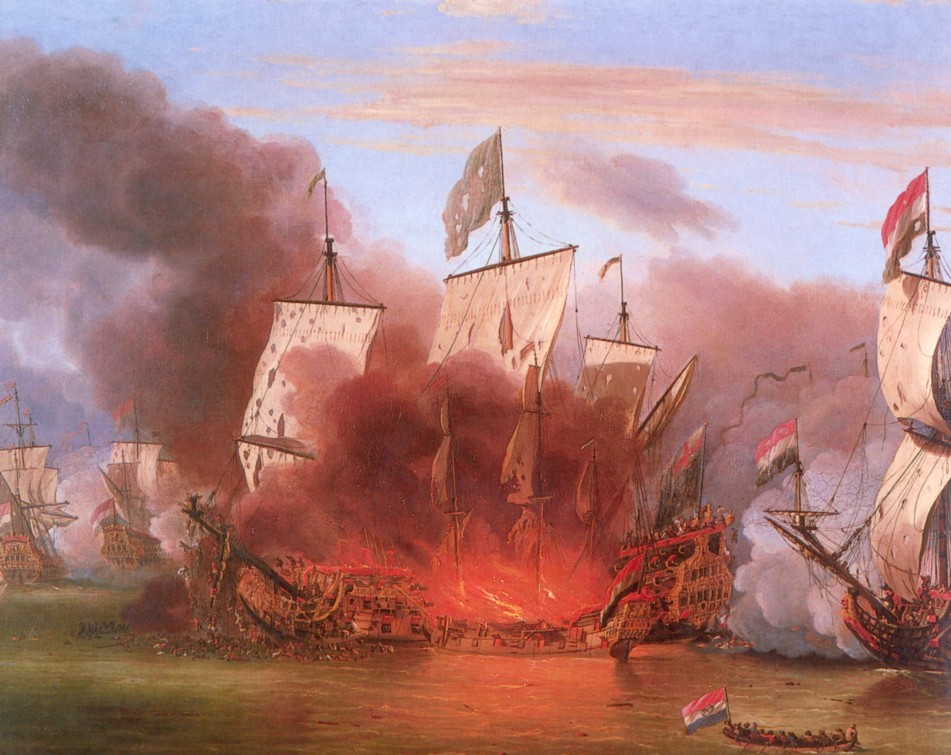
When the announcement was made in the spring of 2009 by the then-President of the NRC Pierre Coulombe that the budget of NRC-CISTI was to be cut by 70% starting in the 2010-11 fiscal year, I held out hope that that this would be more a "right-sizing" than a clumsy bloodletting. At the time, CISTI was largely staffed by aging Boomers who had hung around the place since the late 1970s. Some did great work and were open to new ideas. Others were biding their time and just wanted to keep doing the same routine for a few more years. A handful were blatant slackers who spent all day chatting and smoking on the loading dock. In short, it was a sizeable bureaucracy that I thought would benefit from some fat-trimming. Regardless of what I thought could be done to transform the cumbersome CISTI is another matter. This deep cut was emblematic of the NRC executives' shallow management. Having to find some tens of millions to save they chose to gut an easy target: the library. (Who needs it anyways? It's just a place to store books, right?)

Of course I also made backup plans. The day that the new org-chart was released in October of 2009 (with my name not on it, along with 200 others similarly pink-slipped), I also received a call from H-R that I had won the competition for the position of Business and Planning Officer. Same fantastic salary, different building, and a more high-level approach to the measurement of science. Now I would work at the head office of the NRC, ostensibly using innovation metrics to track the efficiency and performance of the NRC against similar organizations. To use a nautical metaphor, I walked the plank from a sinking ship onto a safe one.

Unfortunately what I found was a ship of fools.

Flitting from meeting to meeting, never having the time to read more than the executive summary of any report (no doubt because it won't fit on the screen of their BlackBerrys), the upper management did not seem to even be aware that there is an entire field of study on how to measure and manage innovation. They were under the gun to cut costs and were hampered by the Balkanized internal culture of the NRC in which each research institute is fiercely independent. Objective metrics of research performance be damned: How much money did we make?

The crazy thing is that we did not know. As the Planning and Business Officer, it was my job to liase with the Finance department and turn their numbers into pretty pie-charts for the bosses. You see, the NRC's Finance department and the vast computerized accounting system they use is designed to keep Treasury Board happy. It is of little use for internal management ("Who's our biggest client in Manitoba?" is almost impossible to answer). In the end, there was only one guy in Finance who knew how to generate accurate figures. Then he stopped answering my emails because the number of such questions from management is infinite.

You know it's time to quit when the daily Dilbert cartoon is an accurate reflection of the day to come.

Less than a year ago Pierre Coulombe was replaced by some guy well past retirement age...from Alberta. While he no doubt has plenty of qualifications, I am sure that Stephen Harper only asked how handy he is with an axe. During my final month at the NRC, 'Paul Bunyan' commanded the executive to develop a new research strategy for the NRC that fit into 6 hot-topic "themes", and to do it all in 3 weeks.

Now by this point I had grown accustomed to being re-assigned to "top priority" projects every couple of weeks because my boss suffered from ADHD. But to see the entire upper management drop everything and launch a frantic series of meetings was something else. Vice-Presidents with careers spanning 30 years pulling all-nighters. Directors-General trying to invent some scheme that would save their institute. Nobody but me seemed to see the absurdity of the task: to select research projects based on how much money they will earn "for Canada" at some point in the future. Besides the vague parameters of the question, the underlying premise that one can predict how much money one will make in industries that do not yet exist based on research that has yet to be done is a feat of divination based on a foundation of guesswork, all performed in the dark.

I began to detect the strong odour of smoke once again coming from the forecastle.

Now...where's that plank?

Monday, 24 January 2011

Niedrigwasser

Just a short post today. I'm working on a more extensive series of posts that will explain how I got here and what I am doing. It was a rainy weekend but we went for a walk by the Rhine anyways. Remember that a couple of weeks ago the river had risen over its banks and had caused some flooding? There was a picture of a sign saying "HOCHWASSER". Well, here is another photo taken from the same spot. You will see the boats are much lower now and the little beer-garden is open for business.


Christine got to ride the big orange bike. It ain't fast, but with 28-inch wheels and high handlebars, it's got a regal ride.

Saturday, 22 January 2011

Karnaval on TV

I am not even going to try to explain what is going on on my TV because I don't understand it myself. First some background: Sometime in February (specifically calculated as some day before some Special Tuesday in the Christian calendar) many cities in Germany celebrate something with a Karneval (which means "Carnival", Einstein). This may have something to do with Mardi Gras, although I did not realize that that particular Tuesday also occurred in Europe (what with daylight savings and all).

Although we are still in January, it seems that preparations for this time-honoured tradition in which Germans pretend they are in New Orleans have already started. There is some strange ceremony on TV right now in which the folks on stage are dressed like the Jack of Diamonds:
Everyone is handing the microphones back and forth, declaring the start of festivities, etc. The audience/banquet-crowd of old people stands and claps. I swear I could be in Japan and would understand more. Anyways, this festival is called "Fashing" in some parts of Germany and "Karneval" in others (Big schism between those who call it one and not the other, apparently). My colleagues poo-poo the Bonn Karneval as being too prim & proper and encourage me to see the "real" one in Koln with its full-on debauchery. Everyone dresses up in a costume and participates in assorted revelry. There may be beer involved.

Thursday, 20 January 2011

Corporate food

Most days a bunch of us from iFQ walk down the street to the Wissenschaftzentrum (Research centre) for lunch.

I am not entirely sure what goes on there: it has variously been explained to me as a conference centre as well as a quasi-governmental science-funding body (like NSERC in Canada). Anyways, it has a big cafeteria. It's the closest, cheapest place to eat. I noticed on only my second time there that the cafeteria is run by...
You have probably never heard of this company, but it is one of the largest food-solution providers in the world. They run the kitchens for the US Marines. They are currently providing sustenance for the entire Paris-Dakar race event (which, for reasons I won't get into, does not run between Paris and Dakar). And they used to run the cafeterias at the NRC back in Ottawa.* The funny thing is that despite the fact Sodexo is a French company, it produces some very bland food. Everything else about it is great: It is efficiently prepared, with both a protein and a starchy item to provide a nutritionally balanced meal. The menu varies from day to day, and it certainly reads well (as much as I can understand the German ingredients). Yet it lacks flavour just as the food back at the old NRC did. Amazing how a corporation can engineer freshly-prepared food to taste the same all around the world. 

* = Before the bean-counters found an even cheaper company to feed us. Gone were the salads and varied menus of a multi-national. Replaced by well-meaning, but mentally-challenged burger-flippers who grudgingly offered an assortment of oily muffins and mystery meat.

Wednesday, 19 January 2011

Jack Reimec

In the US they have REI, in Westboro the Bridgeheads are full of yuppies decked out in MEC wear. In Quebec hipsters on the Plateau must wear a Kanuk coat to be correctly fashionable. Here in Germany, it's all Jack Wolfskin. The logo is omnipresent on backpacks, winter coats, and fleece pullovers. The paw print really makes it clear that you know how to get dirty.
It strikes me as a rediculous name, conceived to leverage a stereotype of what an outdoorsy person should be called. Sort of like the ubiquitous faux-Irish pubs (Grace O'Malley's, D'Arcy McGee's, etc. Taken to its logical extreme, why not open one called Micky O'McMickey's ?). Despite this being the most pleasant, orderly, and clean country I have ever visited, many people on the tram are dressed as if they are preparing for a weekend of camping in the (probably very clean) forest.

Tuesday, 18 January 2011

Bike to work day

Today I bicycled to work. The apartment/hotel where I am staying has a pair of orange single-speed workhorses for residents to use. It is even quicker than taking the tram. The ride home only took 10 minutes.
Here I am behind the building in which I work.
And here is some fun graffiti on the way to work. It is rare to find decent graffiti that displays a bit of creativity. The rest of the urban surfaces are covered in scribbled tags.

Monday, 17 January 2011

Vibración

Yesterday we went to the Bundeskunsthalle ("Federal art hall") to check out an exhibit of 20th-century Latin American art.
The exhibit is a selection from the Ella Fontanals-Cisneros Collection and covers modernist art from the 1930s up to the 70s. It is the kind of art I grew up looking at as a kid in Montreal, so I am familiar with the styles and evolution of the genre. I particularly liked the sculpture and some of the works that employed moiré visual-effects.

It was another lovely day. We took the bus past the large Rheinaue park that stretches halfway down the West bank of the river. Tons of people were out enjoying the sunny day, walking their dogs, riding bicycles, etc. At the back of the bus a Bonn resident was doing the tour-guide thing for a visiting friend and described how "in the winter, there is a skating rink in the park where many people like to skate". Christine and I have heard this old yarn a few times now and just rolled our eyes. Yes, yes; the winter (which must be quite harsh by all accounts) is coming any time now. But yesterday nobody was wearing gloves or hats. I even saw a guy in a T-shirt.

That being said, there was in fact a small outdoor artificial rink next to the art gallery (which must have been cooled by a small nuclear plant) and it was packed with (mostly young) folks going around in circles.